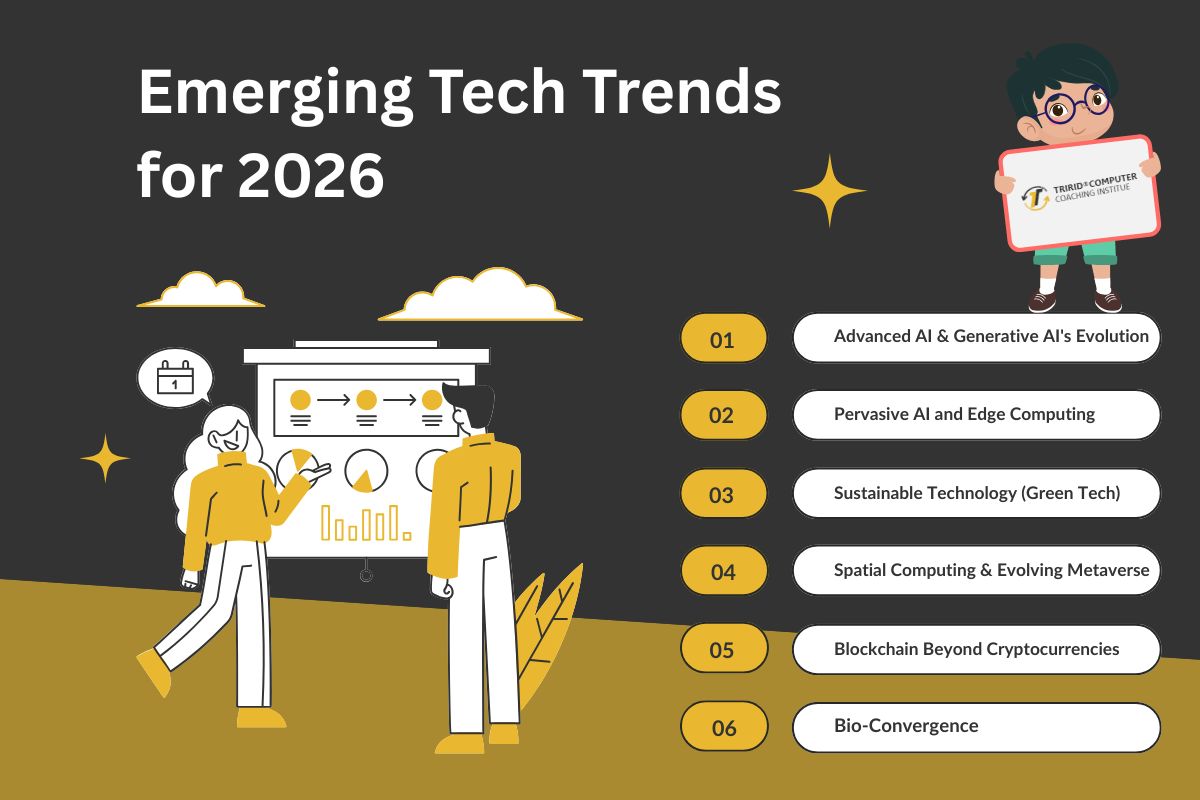
Technology in 2026 is not just evolving—it is reshaping how we live, work, learn, and interact with the world. What once felt experimental is now becoming mainstream, and innovations across industries are accelerating faster than ever. From artificial intelligence that thinks more like humans to breakthroughs in healthcare and connectivity, emerging technologies are redefining possibilities on a global scale.
The real shift isn’t just about new tools—it’s about how deeply these technologies integrate into everyday life. Businesses are transforming, education is becoming more personalized, and even creative industries are being reimagined. Understanding these trends is no longer optional; it’s essential for staying relevant in a rapidly changing world.
Artificial Intelligence, Automation, and the Rise of Smart Systems
Artificial Intelligence (AI) continues to dominate the technological landscape in 2026, but its role has evolved far beyond basic automation. Today’s AI systems are capable of reasoning, contextual understanding, and even creativity. Tools powered by advanced machine learning models are helping businesses make better decisions, optimize operations, and deliver highly personalized user experiences.
One of the most impactful developments is the integration of AI into everyday tools. From smart assistants that manage schedules to AI-powered content creation platforms, the boundary between human and machine collaboration is becoming increasingly blurred. In industries like healthcare, AI is assisting doctors in diagnosing diseases earlier and more accurately, while in finance, it’s detecting fraud patterns in real time.
Automation, when combined with AI, is transforming the workforce. Repetitive and time-consuming tasks are being handled by intelligent systems, allowing humans to focus on strategic and creative work. However, this shift also raises important questions about job displacement and the need for reskilling. Workers are now expected to adapt quickly, learning new digital skills to stay competitive.
Another key advancement is the rise of generative AI. Unlike traditional systems that analyze data, generative models can create text, images, music, and even code. This is revolutionizing industries such as marketing, entertainment, and software development. Companies are leveraging these tools to reduce costs, speed up production, and unlock new creative possibilities.
At the same time, ethical concerns around AI are gaining attention. Issues like data privacy, bias in algorithms, and the responsible use of AI are becoming central topics in global discussions. Governments and organizations are working to establish guidelines to ensure that AI is used safely and fairly.
Biotechnology, Health Tech, and Human Enhancement
The intersection of technology and biology is one of the most exciting frontiers in 2026. Biotechnology and health tech innovations are not only improving medical treatments but also redefining what it means to be healthy. Advances in genetic engineering, personalized medicine, and wearable health devices are transforming healthcare from reactive to proactive.
One of the biggest breakthroughs is in personalized medicine. Instead of a one-size-fits-all approach, treatments are now tailored to an individual’s genetic makeup. This allows for more effective therapies with fewer side effects. For example, cancer treatments are becoming increasingly targeted, improving survival rates and quality of life for patients.
Wearable technology has also evolved significantly. Devices are no longer limited to tracking steps or heart rate—they can now monitor blood oxygen levels, detect irregular heart rhythms, and even predict potential health issues before they become serious. These innovations empower individuals to take control of their health and make informed decisions.
Another major development is in gene editing technologies. Tools like CRISPR are enabling scientists to modify DNA with unprecedented precision. This opens up possibilities for curing genetic disorders, improving crop yields, and even combating climate change. While the potential is immense, it also raises ethical questions about how far humanity should go in altering life at a genetic level.
Telemedicine and digital health platforms are also gaining traction. Patients can now consult doctors remotely, access medical records online, and receive treatment recommendations through AI-powered systems. This is particularly beneficial in regions with limited access to healthcare facilities, bridging gaps and improving accessibility.
Human enhancement technologies are also emerging as a significant trend. From brain-computer interfaces to advanced prosthetics, technology is helping people overcome physical limitations and even enhance their capabilities. While still in early stages, these innovations hint at a future where the line between human and machine becomes increasingly blurred.
Connectivity, Web Evolution, and the Future of Digital Experiences
Connectivity is the backbone of modern technology, and in 2026, it is reaching new heights. The expansion of high-speed networks like 5G—and the early development of 6G—is enabling faster, more reliable communication. This is not just about quicker downloads; it’s about enabling entirely new experiences, from real-time virtual collaboration to immersive digital environments.
The evolution of the internet is another major trend. The concept of Web3 is gaining momentum, emphasizing decentralization, transparency, and user ownership. Unlike traditional platforms controlled by large corporations, Web3 technologies use blockchain to give users more control over their data and digital assets. This shift has the potential to disrupt industries such as finance, social media, and online commerce.
The metaverse is also becoming more tangible. While still evolving, virtual and augmented reality technologies are creating immersive digital spaces where people can work, socialize, and entertain themselves. Businesses are exploring virtual offices, educators are experimenting with immersive classrooms, and brands are building interactive experiences for customers.
Edge computing is another critical development supporting these advancements. Instead of relying solely on centralized data centers, edge computing processes data closer to where it is generated. This reduces latency, improves performance, and enables real-time applications such as autonomous vehicles and smart cities.
Speaking of smart cities, urban environments are becoming more connected and efficient through the use of IoT (Internet of Things) devices. Sensors are being used to manage traffic, monitor air quality, and optimize energy consumption. These technologies are helping cities become more sustainable and livable.
Cybersecurity is also evolving alongside these advancements. As systems become more interconnected, the risk of cyber threats increases. New security technologies are being developed to protect data, ensure privacy, and safeguard critical infrastructure. This includes AI-driven security systems that can detect and respond to threats in real time.
The way people interact with digital content is also changing. Voice interfaces, gesture controls, and immersive experiences are replacing traditional input methods. This shift is making technology more intuitive and accessible, allowing a broader range of people to benefit from digital innovations.
The technologies emerging in 2026 are not isolated—they are interconnected and often amplify each other’s impact. AI powers healthcare innovations, connectivity enables smart systems, and biotechnology reshapes human potential. Together, they are creating a future that is more intelligent, efficient, and personalized than ever before.
For individuals, this means new opportunities to learn, adapt, and grow. For businesses, it means rethinking strategies and embracing innovation to stay competitive. And for society as a whole, it presents both exciting possibilities and important challenges that must be addressed thoughtfully.
The pace of change may feel overwhelming, but it also brings unprecedented potential. Those who understand and engage with these emerging technologies will be better positioned to shape the future rather than simply react to it.