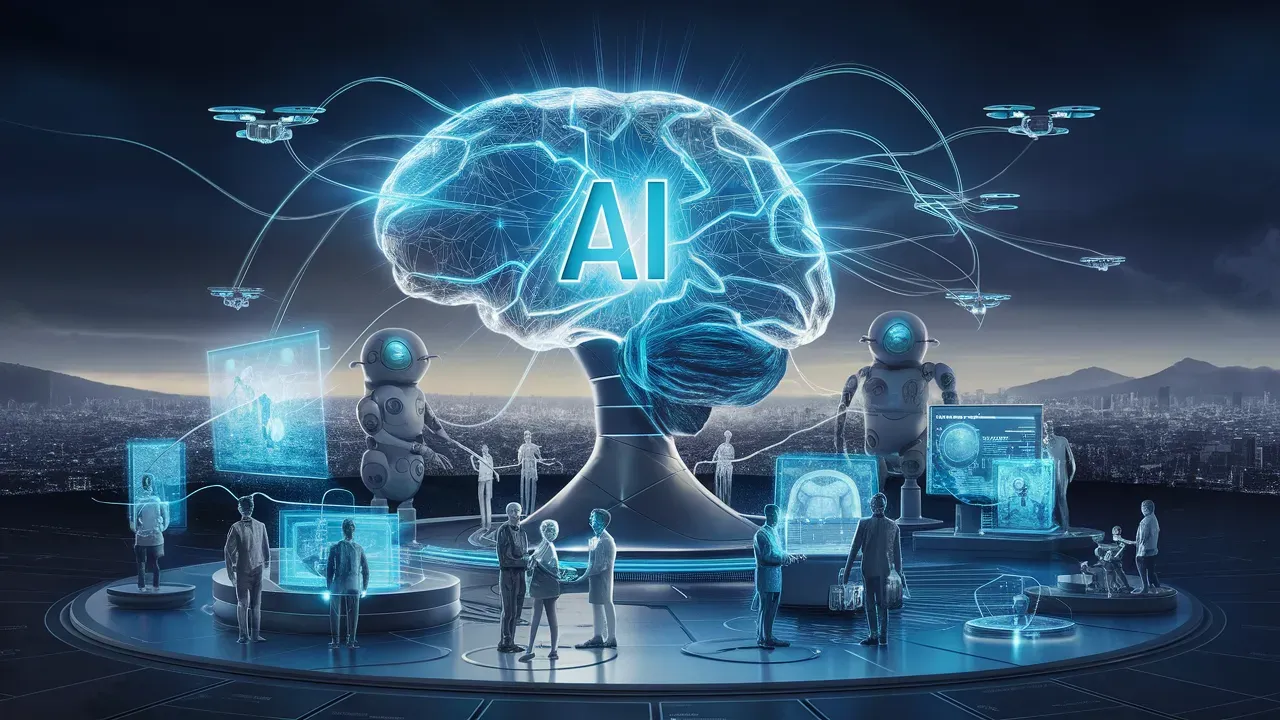
Artificial Intelligence (AI) is no longer something confined to research labs or futuristic discussions. In 2026, it has become a deeply integrated part of everyday life, quietly powering many of the tools and services people use daily. From the way we communicate and shop to how we travel, learn, and manage our health, AI is reshaping routines in ways that often go unnoticed.
What makes this transformation remarkable is its subtlety. AI doesn’t always appear as a visible feature; instead, it works in the background—analyzing data, learning patterns, and making decisions that improve convenience and efficiency. The result is a world where everyday tasks are becoming faster, smarter, and more personalized.
Smarter Homes, Communication, and Daily Convenience
One of the most visible impacts of AI in daily life is in the home. Smart home devices have evolved from simple voice assistants into intelligent systems that can understand habits and automate routines. Lighting adjusts based on your preferences, thermostats optimize temperature throughout the day, and security systems use facial recognition to identify visitors. These systems are not just reactive—they learn over time, making homes more comfortable and energy-efficient.
Communication has also been transformed by AI. Email platforms now prioritize important messages, filter spam more effectively, and even suggest replies. Messaging apps use AI to enhance conversations through features like real-time translation, predictive text, and voice recognition. This makes communication faster and more accessible, especially in a globally connected world.
Virtual assistants have become more capable as well. They can schedule meetings, set reminders, answer questions, and even control other smart devices. Over time, these assistants adapt to user preferences, becoming more personalized and useful. Instead of manually managing multiple tasks, people can rely on AI to handle routine activities, freeing up time for more meaningful work.
Shopping and online experiences have also become highly personalized. E-commerce platforms use AI to recommend products based on browsing history, preferences, and behavior. Streaming services suggest movies and music tailored to individual tastes. Even search engines have improved, delivering more accurate and context-aware results.
Transportation is another area where AI is making everyday life easier. Navigation apps use real-time data to suggest the fastest routes, avoid traffic, and predict arrival times. Ride-sharing platforms match drivers and passengers efficiently, reducing wait times and improving overall service. In some regions, autonomous vehicles are beginning to emerge, hinting at a future where driving may become less manual and more automated.
AI in Healthcare, Education, and Personal Development
AI is playing a transformative role in improving health and well-being. In healthcare, it is being used to detect diseases earlier, analyze medical data more accurately, and assist doctors in making better decisions. For example, AI systems can analyze medical images to identify signs of conditions like cancer at an early stage, increasing the chances of successful treatment.
Wearable devices have also become more advanced, tracking not just steps but a wide range of health metrics. These devices can monitor heart rate, sleep patterns, stress levels, and even detect irregularities that may require medical attention. By providing real-time insights, AI empowers individuals to take a proactive approach to their health.
Telemedicine has expanded access to healthcare services. Patients can consult doctors remotely, receive prescriptions, and monitor ongoing treatments without visiting a hospital. This is particularly beneficial in areas with limited healthcare infrastructure, making medical support more accessible and convenient.
In education, AI is changing how people learn. Personalized learning platforms adapt to individual strengths and weaknesses, offering customized lessons and feedback. Students can learn at their own pace, revisiting concepts they find difficult while progressing quickly through topics they understand well.
AI-powered tutoring systems provide instant assistance, answering questions and explaining concepts in detail. This reduces the need for constant human intervention and allows learners to study more independently. Teachers also benefit from AI tools that help with grading, lesson planning, and tracking student performance.
Beyond formal education, AI is supporting personal development in various ways. Language learning apps use AI to improve pronunciation and provide real-time feedback. Fitness apps create customized workout plans based on user goals and progress. Even mental health support is being enhanced through AI-driven chatbots that offer guidance and coping strategies.
These advancements are making learning and self-improvement more accessible than ever before. People no longer need to rely solely on traditional systems; they can use AI-powered tools to develop new skills and improve their quality of life.
Work, Productivity, and the Changing Nature of Human Interaction
The workplace is undergoing a significant transformation due to AI. Routine tasks that once required hours of manual effort are now automated, allowing employees to focus on more strategic and creative activities. From data entry and report generation to customer support and analytics, AI is streamlining operations across industries.
In offices, AI tools are being used to manage schedules, organize meetings, and analyze data. Employees can generate reports, summarize documents, and even draft emails with the help of AI assistants. This not only saves time but also improves accuracy and consistency.
Remote work has also been enhanced by AI. Collaboration tools now include features like real-time transcription, automated summaries, and smart notifications. Teams can work more efficiently, even when they are spread across different locations and time zones.
Customer service is another area where AI is making a noticeable impact. Chatbots and virtual agents can handle common queries, provide instant responses, and operate 24/7. This improves customer experience while reducing the workload on human support teams. More complex issues can still be handled by humans, creating a balanced approach between automation and personal interaction.
AI is also influencing decision-making in businesses. By analyzing large amounts of data, AI systems can identify trends, predict outcomes, and provide actionable insights. This helps organizations make informed decisions faster and with greater confidence.
However, the rise of AI in the workplace also brings challenges. Job roles are evolving, and some traditional positions are being replaced by automated systems. This makes it essential for individuals to continuously learn and adapt. Skills such as critical thinking, creativity, and emotional intelligence are becoming more valuable, as they complement the capabilities of AI.
Human interaction itself is changing. While AI improves efficiency, it also raises questions about the balance between automation and genuine human connection. For example, while chatbots can handle basic communication, they cannot fully replicate empathy and understanding. Maintaining this balance will be crucial as AI continues to integrate into daily life.
Artificial Intelligence is not just transforming industries—it is reshaping the way people live, learn, and interact with the world around them. Its influence can be seen in small everyday conveniences as well as major life-changing advancements.
The key to navigating this transformation lies in understanding and adapting to these changes. By embracing AI as a tool rather than viewing it as a replacement, individuals and organizations can unlock new opportunities and improve their overall quality of life.
As AI continues to evolve, its presence in everyday life will only grow stronger. Those who learn to use it effectively will find themselves better equipped to thrive in a world where technology and human potential are increasingly interconnected.