What Is Interactive Emails? A Comprehensive Guide to the Future of Inbox Engagement
The digital landscape is evolving at a breakneck pace, yet for many years, email marketing remained relatively stagnant. Most brands were sending “static” messages—essentially digital flyers that required a user to click a link and leave their inbox to perform any meaningful action. However, that era is coming to an end.
Welcome to the age of interactive emails.
In this comprehensive guide, you will learn everything there is to know about this transformative technology. From the technical foundations to advanced implementation strategies, this pillar content is designed to turn you into an expert in modern email engagement.
What Exactly Is an Interactive Email?
At its core, an interactive email is a message that allows the recipient to take a specific action within the email itself without having to navigate to a separate landing page or external website.
In a traditional static email, the goal is usually to get the user to click a “Call to Action” (CTA) button that redirects them to a browser. In an interactive email, the “landing page” experience is brought directly into the inbox. Whether it is browsing a product carousel, taking a quiz, or RSVPing to an event, the friction of the extra click is removed.
The Shift from Static to Dynamic
Static emails are one-way communications. You send, they read (hopefully), and they leave. Interactive emails, however, create a two-way dialogue. By incorporating elements that respond to user input—such as hovering, clicking, or typing—you transform the email from a passive notification into an active experience.
Why You Should Care: The Benefits of Interactivity
If you are wondering whether the effort to build interactive emails is worth it, the data provides a resounding “yes.”
1. Massive Boost in Click-to-Open Rates (CTOR)
When users find an email engaging, they are more likely to interact with it. Industry reports suggest that adding interactive video content can increase click rates by up to 300%. By reducing the steps required to complete a task, you naturally increase the likelihood of conversion.
2. Enhanced User Experience (UX)
In a world of short attention spans, convenience is king. If you allow a customer to select their clothing size and add an item to their cart directly within the email, you have saved them time and effort. This seamless experience builds brand loyalty and trust.
3. Higher Quality Data Collection
Interactive elements like polls, surveys, and quizzes allow you to collect zero-party data. Instead of guessing what your subscribers like based on their browsing history, you can ask them directly within the email. This data is invaluable for future personalization.
4. Reduced Friction in the Sales Funnel
Every click is an opportunity for a lead to drop off. By eliminating the transition from the email client to the web browser, you remove a major point of friction in the customer journey.
The Building Blocks: Common Interactive Elements
Interactivity can range from simple visual cues to complex functional tools. Here are the most common elements you can implement today:
Image Carousels and Sliders
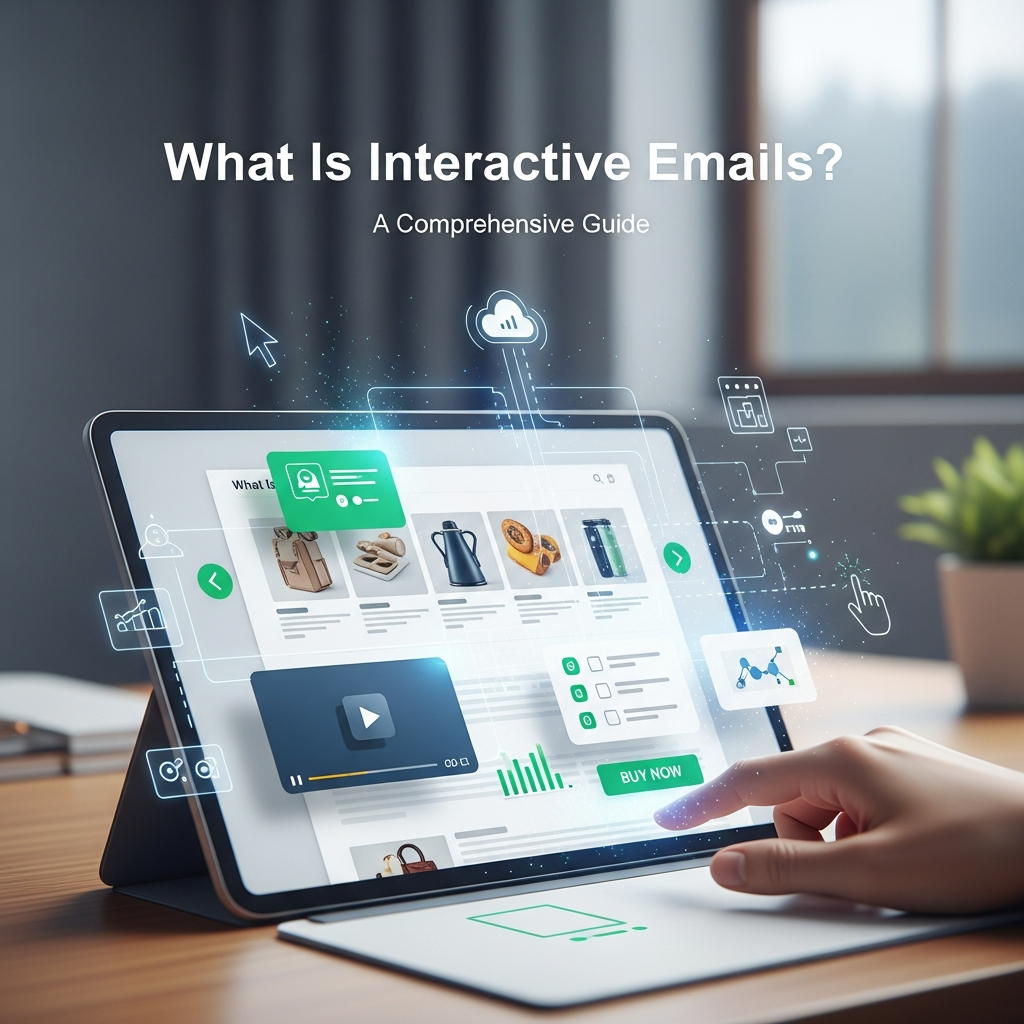
Instead of a long, scrolling email that loses the reader’s interest, you can use a carousel. This allows users to click through multiple images (like a product gallery) within a single block of space. It is particularly effective for e-commerce brands showcasing a new collection.
Accordions for Content Organization
If you have a lot of information to share—such as an FAQ section or detailed product specifications—accordions are your best friend. They allow users to expand and collapse sections of text, keeping the email layout clean and readable.
Embedded Polls and Surveys
Gone are the days of clicking a link to “Take our 2-minute survey.” With interactive emails, the survey questions live in the inbox. Users can tap their choice, and the results can even update in real-time.
Hover Effects
A subtle but effective form of interactivity. When a user hovers their mouse over a button or image, it changes color, grows in size, or reveals hidden text. This provides immediate visual feedback that the element is “live” and clickable.
Add-to-Cart and In-Email Checkout
This is the “Holy Grail” of interactive email. Using advanced technologies like AMP for Email, users can select product options (size, color, quantity) and add them to their shopping cart without ever leaving the Gmail or Outlook app.
Gamification
Interactive emails allow for mini-games, “scratch-off” discount codes, or spin-the-wheel features. These elements tap into the human psychology of curiosity and reward, significantly increasing the time spent on your email.
The Technical Side: How Interactive Emails Work
To implement these features, you generally rely on three main technical approaches. Understanding these will help you communicate effectively with your development team.
1. Advanced CSS (The “Checkbox Hack”)
Most basic interactivity—like accordions and carousels—is powered by clever CSS (Cascading Style Sheets). By using hidden checkboxes and radio buttons, developers can trigger changes in the email’s layout when a user clicks a specific area.
- Pros: Widely supported by Apple Mail and iOS.
- Cons: Can be complex to code and has limited functionality for data processing.
2. AMP for Email (Google’s Framework)
AMP (Accelerated Mobile Pages) for Email is a framework developed by Google that allows for truly dynamic content. It enables emails to stay updated with real-time data (like stock levels or live sports scores) and allows for complex form submissions.
- Pros: Powerful, allows for “app-like” functionality, and is highly secure.
- Cons: Requires a separate MIME part in the email code and is currently supported primarily by Gmail, Yahoo, and Mail.ru.
3. HTML5 Video and Audio
While not “interactive” in the sense of data entry, embedding HTML5 video allows users to play content directly in the inbox.
- Pros: High engagement.
- Cons: Support varies wildly across email clients (many will fall back to a static image).
The Challenge: Email Client Compatibility and Fallbacks
The biggest hurdle in interactive email marketing is that not every email client (Gmail, Outlook, Apple Mail, etc.) renders code the same way.
- Apple Mail is the most “friendly” toward interactive CSS.
- Gmail supports AMP for Email but has specific requirements.
- Outlook (Desktop) is notoriously difficult and often only supports basic static HTML.
The Necessity of a “Fallback Strategy”
A fallback is the static version of your email that appears if the recipient’s email client does not support interactive elements.
You must always design the fallback first.
If your interactive carousel doesn’t work in Outlook, the user should instead see a well-organized grid of images. The experience should be “Graceful Degradation”—the email remains functional and beautiful even if the “bells and whistles” are stripped away.
Step-by-Step: How to Plan Your First Interactive Campaign
If you are ready to move beyond static images, follow this strategic roadmap:
Step 1: Define Your Goal
Don’t add interactivity just for the sake of it. Ask yourself: “What friction am I trying to remove?”
- If you want more reviews, embed a star-rating system.
- If you want to clear inventory, use a product carousel.
Step 2: Choose the Right Tools
Check if your Email Service Provider (ESP) supports interactive elements or AMP. Platforms like Mailchimp, Salesforce Marketing Cloud, and specialized tools like Dyspatch or Stripo offer drag-and-drop interactive blocks that don’t require deep coding knowledge.
Step 3: Design for Mobile First
The majority of interactive actions happen on mobile devices. Ensure your buttons are “thumb-friendly” and that your carousels work with swipe gestures.
Step 4: Develop the Fallback
Ensure that 100% of your audience gets a great experience. Test how the email looks in “plain text” and standard HTML.
Step 5: Rigorous Testing
Use tools like Litmus or Email on Acid to preview your email across dozens of different devices and clients. What looks great in your Gmail app might be broken in your boss’s Outlook 2016.
Best Practices for Interactive Email Success
To ensure your campaign performs well and avoids the spam folder, keep these expert tips in mind:
- Keep it Simple: Do not overwhelm the user with too many moving parts. One primary interactive element per email is usually sufficient.
- Provide Visual Cues: Users are used to static emails. Use “tooltips” or small text instructions like “Swipe to see more” or “Click to expand” to guide them.
- Monitor Load Times: Interactive code can be heavy. Optimize your images and keep your CSS clean to ensure the email opens instantly.
- Focus on Accessibility: Ensure that your interactive elements are screen-reader friendly. Use proper ARIA labels and ensure there is enough color contrast.
- Track the Right Metrics: Traditional “Click-Through Rate” might actually decrease because users are completing actions inside the email. You need to track “In-Email Conversions” or “Engagement Time” instead.
Use Cases Across Different Industries
How can you apply this to your specific business?
- E-commerce: Use a “Scratch and Win” element to reveal a discount code. This adds an element of fun and increases the “open-to-redemption” rate.
- SaaS (Software as a Service): Create an interactive onboarding checklist. As users complete tasks in your app, the email updates to show their progress.
- Real Estate: Embed a 360-degree virtual tour or a mortgage calculator directly in the announcement of a new listing.
- Event Planning: Allow users to select their meal preferences or choose their seats directly within the RSVP email.
The Future of Interactive Emails
As 5G technology becomes standard and email clients continue to modernize, the line between “Email” and “App” will continue to blur. We are moving toward a “Headless Web” where the inbox acts as a portal to various services.
Expect to see more integration with Artificial Intelligence (AI), where interactive elements change in real-time based on the user’s current location, local weather, or most recent purchase history.
Frequently Asked Questions (FAQ)
1. Does every subscriber see the interactive version?
No. Depending on the email client they use, some will see the interactive version (like Apple Mail or Gmail users), while others will see a static “fallback” version.
2. Is interactive email bad for deliverability?
Not inherently. However, poorly written code or excessively large file sizes can trigger spam filters. Always use a reputable ESP and test your “Spam Score” before sending.
3. Do I need to be a coder to create interactive emails?
While custom interactivity requires CSS/HTML knowledge, many modern email editors now offer “No-Code” interactive blocks for carousels, polls, and accordions.
4. What is the difference between an interactive email and a GIF?
A GIF is an animated image that plays automatically; it is passive. An interactive email requires a user’s input (a click, hover, or swipe) to change the content or trigger an action.
5. How do I measure the success of an interactive email?
You should look at conversion rates (actions completed), time spent viewing the email, and the specific interaction data (e.g., which slide in a carousel was viewed most).
Conclusion
Interactive emails represent a significant leap forward in how brands communicate with their audience. By turning the inbox into a functional workspace, you respect your customer’s time and provide a level of engagement that static emails simply cannot match.
While the technical requirements and the need for fallbacks add a layer of complexity, the rewards—higher CTR, better data, and increased sales—make it a necessary evolution for any serious digital marketer.
Are you ready to stop sending emails and start sending experiences? The journey begins with your next campaign. Start small, test everything, and watch your engagement metrics soar.